To Be With Counseling

Karah Hammontree MA, RMHCI
Karah is a Registered Mental Health Counselor Intern in the State of Florida who is passionate about walking alongside her clients in their search for long-lasting freedom from eating disorders and body image issues. Some other areas that Karah often treats includes chronic illness, autism, ADHD, OCD, trauma, abuse, relationship difficulties, anxiety, depression, and building self-confidence. In assisting her clients uncover the root issues that have contributed to the development of an unhealthy relationship with food and body, limited their life due to trauma, illness, or fears, or created a way of living where one doesn’t feel truly free, she has witnessed the unequivocal transformation that occurs when one is able to come back home to themselves, utilizing compassion, kindness, and curiosity, in this needed restoration process.
Explore what we offer
Counseling
We offer mental health therapy to children, adolescents, and adults, addressing an array of struggles including eating disorders, trauma, chronic illness, and anxiety.
Equine Therapy
Explore an array of mental health resources to expand awareness and provide support in-between sessions.
Resources
Equine-Facilitated Psychotherapy is a unique experiential model of mental health therapy that assists with addressing core mental health needs in a less stressful and more holistic way.
Mental Health Resources
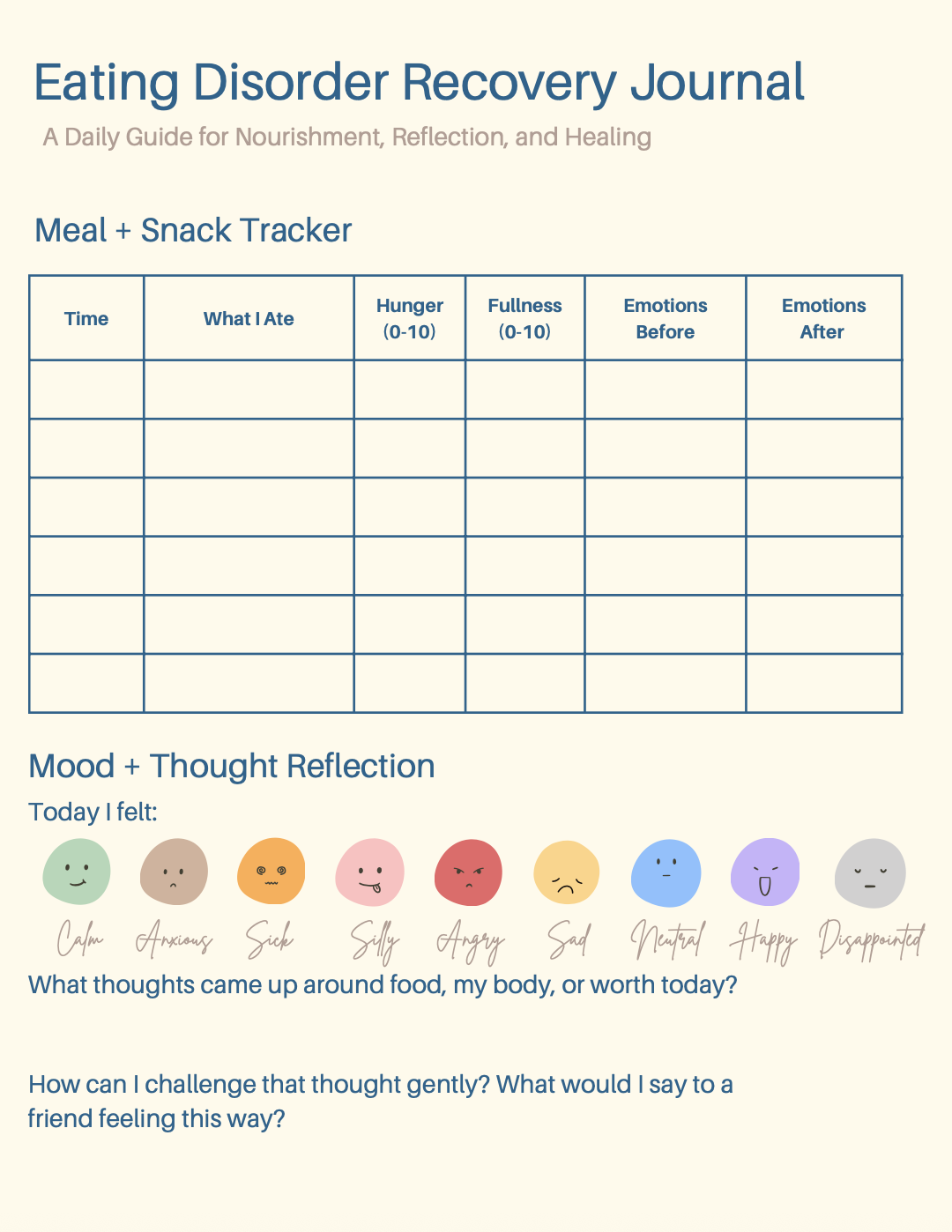
Eating Disorder Recovery Journal
Whether you have been diagnosed with an eating disorder or simply desire a more connected, compassionate relationship with food and your body, the Eating Disorder Recovery Journal offers a supportive, structured space for reflection, healing, and growth.
Designed for daily use, this journal gently guides individuals in exploring thoughts, emotions, behaviors, body image, nourishment patterns, and recovery experiences through intentional prompts and reflection exercises. It encourages greater self-awareness, emotional insight, and practical coping while fostering self-compassion throughout the recovery journey.
Recovery is not linear, and this journal was created to meet you with flexibility, curiosity, and care—not perfection. Whether used alongside professional treatment or as part of personal healing, it can help create more consistency, mindfulness, and connection in your relationship with food, your body, and yourself.
Why this journal can be helpful:
Supports self-awareness
Explore patterns, triggers, emotions, thoughts, and behaviors in a nonjudgmental way to better understand your recovery journey.
Encourages consistency in recovery
Daily journaling can support structure, accountability, reflection, and emotional processing between therapy sessions or during independent healing.
Promotes self-compassion and resilience
Gentle prompts encourage curiosity over criticism and support building a kinder relationship with yourself throughout recovery.
Creates space for deeper healing
Designed to complement treatment or personal growth, this journal can help strengthen emotional insight, coping skills, and a more connected relationship with food and body image.
Created with warmth, intention, and recovery in mind, this journal serves as a meaningful companion for healing—one page, one meal, and one moment at a time.
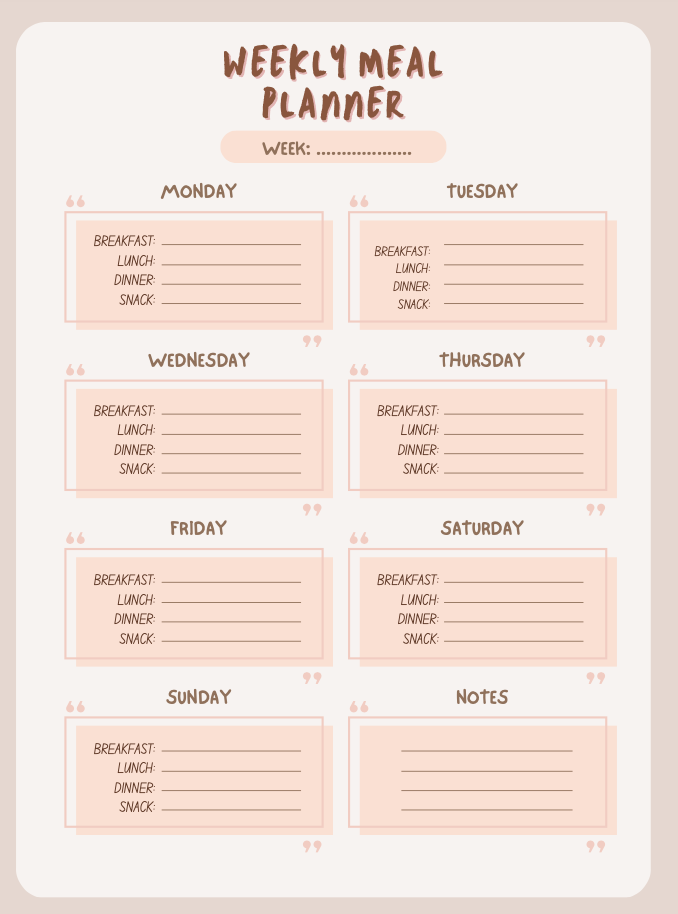
Weekly Meal Planner & Grocery List Bundle
Simplify meal planning, reduce stress, and support your overall well-being with this thoughtfully designed Weekly Meal Planner + Grocery List Bundle. Created to help you nourish yourself consistently and intentionally, this resource makes planning meals feel more manageable, flexible, and less overwhelming.
Whether you are working toward better nutrition, managing a chronic illness, or healing your relationship with food, having a plan can reduce decision fatigue, increase consistency, and make eating feel more accessible.
Why this resource is beneficial:
Supports balanced nutrition
Meal planning can help create more consistent nourishment, encourage variety, and make it easier to include meals and snacks that support energy, stability, and overall health. Planning ahead can also reduce last-minute food decisions that often lead to skipping meals or relying on less supportive options.
Helpful for chronic illness management
For individuals navigating chronic illness, fatigue, limited energy, fluctuating symptoms, food sensitivities, or medical dietary needs, meal planning can reduce daily overwhelm and conserve precious energy. Having meals and groceries organized ahead of time can make nourishing yourself more realistic on difficult symptom days and help support symptom management through consistency.
Supports eating disorder recovery
In recovery, structure and consistency around nourishment are often important parts of healing. A weekly meal planner can help reduce anxiety around food decisions, encourage regular eating patterns, support meal accountability, and create a gentler, more intentional approach to nourishment. Rather than relying on restriction, avoidance, or chaotic eating patterns, planning meals can support trust, stability, and recovery-focused habits.
This planner is designed to be flexible—not rigid—because nourishment should support your life, not control it. Use it as a tool to reduce stress, increase ease, and help make caring for yourself feel a little more manageable each week.
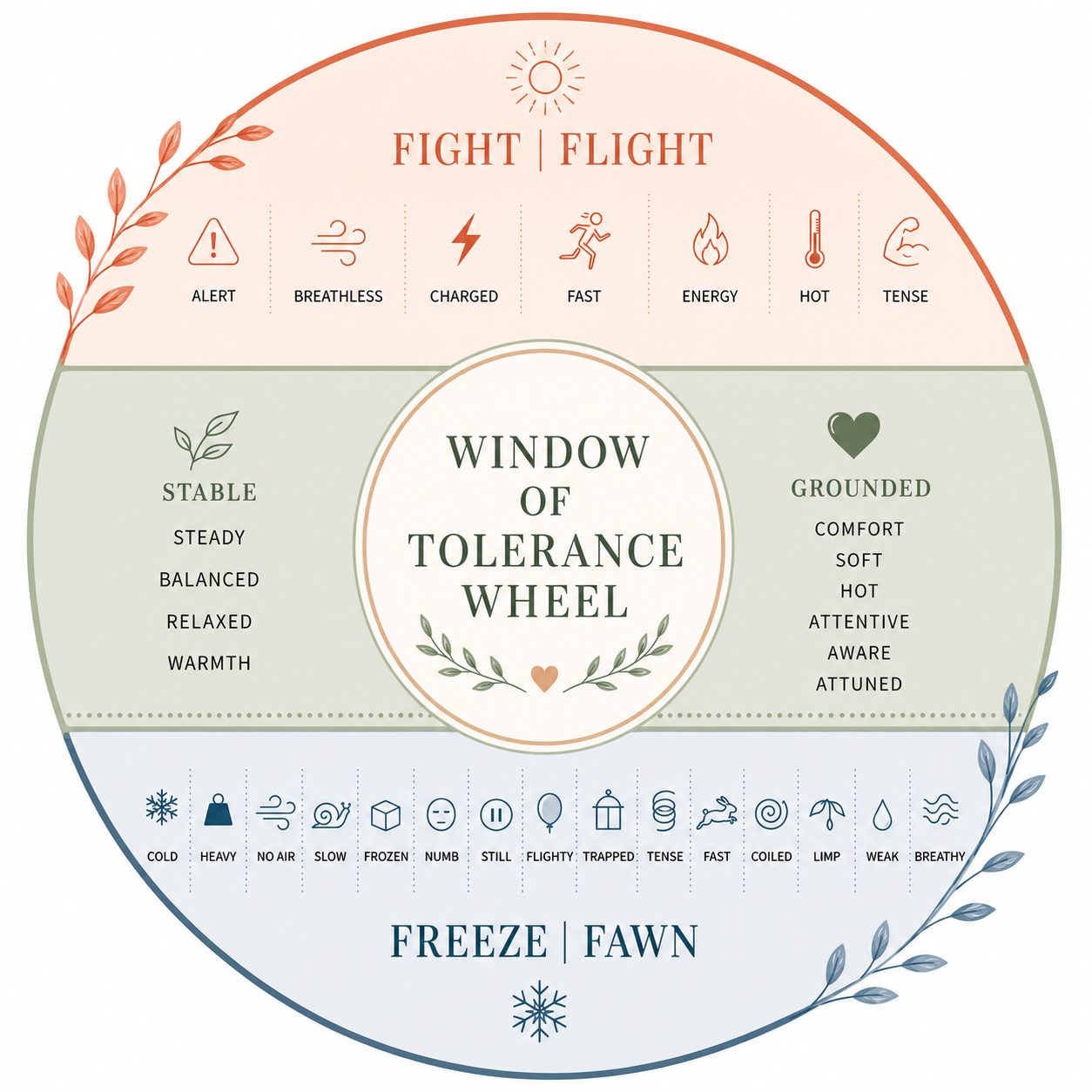
Window of Tolerance Wheel – Nervous System Awareness & Regulation Tool
Gain a deeper understanding of your nervous system and emotional responses with this beautifully designed Window of Tolerance Wheel. Created as an easy-to-understand visual resource, this tool helps identify what it feels like to be within your “window of tolerance” versus states of nervous system overwhelm or shutdown.
The Window of Tolerance is a concept often used in therapy, trauma healing, emotional regulation, and recovery work to help individuals recognize patterns in how they respond to stress, overwhelm, triggers, and dysregulation.
This wheel provides a visual guide to common emotional, mental, and physical experiences associated with different nervous system states, helping you better recognize when you may be feeling grounded, activated, overwhelmed, shut down, or disconnected.
Why this resource is beneficial:
Builds self-awareness
Learn to recognize signs that your nervous system may be moving into fight, flight, freeze, or fawn responses before overwhelm escalates.
Supports emotional regulation
By identifying where you are in your window of tolerance, you can begin responding with greater compassion, awareness, and intentional coping strategies rather than reacting automatically.
Helpful for trauma, anxiety, chronic illness, and eating disorder recovery
Many individuals navigating trauma, chronic stress, chronic illness, anxiety, or eating disorder recovery experience nervous system dysregulation. This wheel can help increase awareness of body-based cues, emotional shifts, and stress responses in a gentle, accessible way.
Encourages grounding and nervous system connection
Understanding what “regulated” feels like can make it easier to notice when you need support, rest, nourishment, movement, boundaries, or grounding practices.
Designed with warmth and clarity in mind, this Window of Tolerance Wheel serves as a practical psychoeducation and self-reflection tool for therapy, recovery work, journaling, group settings, or everyday self-awareness.
Follow Us on Social Media